
From Sanding to Savings: How Kovax...
- Home
- news & articles
- From Sanding to Savings: How Kovax’s Topcoat Dry Abrasive

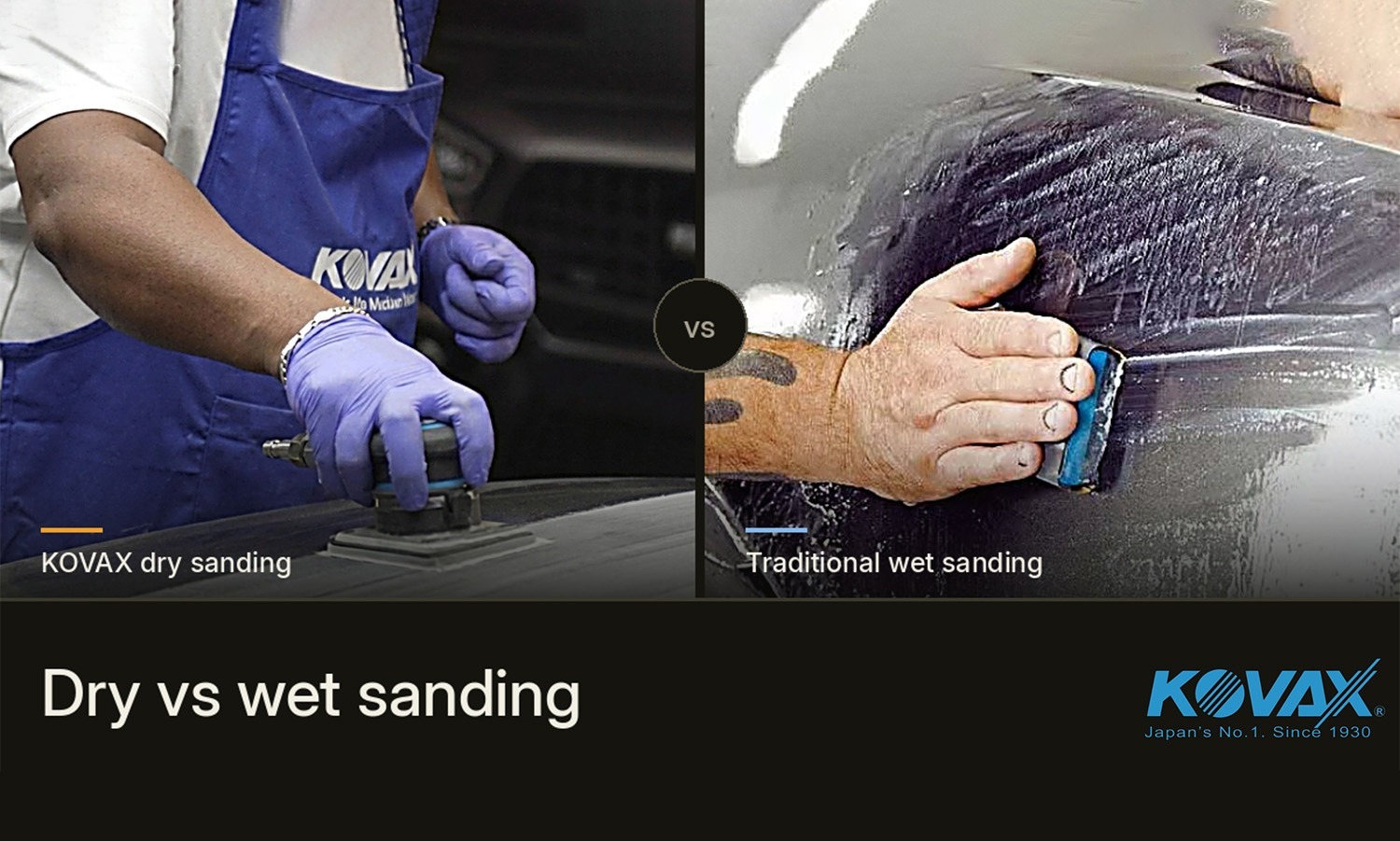
Bodyshop profitability has become a strategic concern for OEMs, not just a dealer-level metric. Rising labor costs, tighter customer expectations around cycle time, increased warranty and rework scrutiny, and growing environmental compliance requirements are squeezing margins across authorized service networks—regardless of brand.
The question isn’t just “which abrasive system works”—it’s “which system, when standardized across the network, measurably improves dealer profitability while meeting quality, safety, and compliance benchmarks?”
This is where dry abrasive technology—and Kovax’s topcoat dry sanding systems in particular—presents a compelling and highly relevant case.
Why Traditional Topcoat Wet Sanding Falls Short
Conventional top-coat wet sanding processes—still common across many dealer body shops—carry hidden costs that rarely show up on a single job card but add up significantly at network scale:
These aren’t abstract inefficiencies—they directly erode the per-job margin dealers to report back to OEM performance dashboards.
How Kovax Dry Abrasive Systems Address Each Pressure Point in Topcoat Dry Sanding
| Pressure Point | Traditional Wet Sanding | Kovax Dry Abrasive System |
| Cycle time | Slower, requires drying time | Faster prep, no drying delay |
| Consistency | Technique-dependent | Uniform grit performance for a more consistent finish |
| Labor hours | More manual steps | Fewer steps, faster turnaround |
| Environmental/safety | Wastewater, slurry disposal | Dust extraction systems, no water waste |
| Rework risk | Higher due to inconsistency | Lower due to standardized finish quality |
The topcoat dry system design—engineered grit structures, efficient dust extraction, and Kovax’s dry sanding technology—reduces the effort and interruptions technicians typically face with wet methods, while improving finish quality.
The Dealer-Level Financial Impact
For an individual dealer Bodyshop, the shift to Topcoat dry sanding typically shows up in three ways:
Even a modest 15–20% reduction in finishing time per vehicle, multiplied across a dealer’s annual job volume, translates into meaningful additional throughput capacity without added headcount or floor space.
A simulated calculation of Turnaround of an average Bodyshop with Kovax Topcoat dry system.
For an individual dealer Bodyshop that repairs 200 cars per month, with an average repair cost of ₹15,000 per car.
| Metric | Value |
| No of Job Cards per Month | 200 nos |
| Bodyshop Revenue per Job | ₹15,000 |
| Monthly Body & Paint Revenue | ₹3,000,000 |
Expected Additional Revenue of Bodyshop with an avg Job card of 200 nos with Kovax Topcoat dry system
| Basis | Monthly Additional Revenue | Annual Additional Revenue | |
| Additional output (15% more Jobs via faster cycle time) | 30 cars /month x ₹15000 | +₹450,000 | +₹ 5,400,000 |
A Comparison of Topcoat Wet Sanding Vs Topcoat Dry Sanding System
| Metric | Topcoat Wet sanding | Kovax Topcoat dry system | Improvement |
| Avg time per panel | 20 min- 30 min | 10 min-15 min | ~40% faster |
| Drying/downtime buffer | 10 min | Nil | Fully eliminated |
| Polishing time | 10 min – 15 min | 7 min – 10 min | ~30% faster |
| Technician-dependent variance | High | Low | Standardized finish |
Bodyshop profitability isn’t solved by charging more per job — it’s solved by doing more jobs, with fewer errors, in less time, at lower operating cost. Kovax dry abrasive systems address the operational core of that equation, making them a strong candidate for OEM technical approval and network-wide standardization.
For OEM After Sales and Bodyshop evaluating next-generation finishing technology, the sanding stage — often overlooked as a “back-of-shop” process — may be one of the highest-leverage points for improving both dealer profitability and brand-wide service quality.
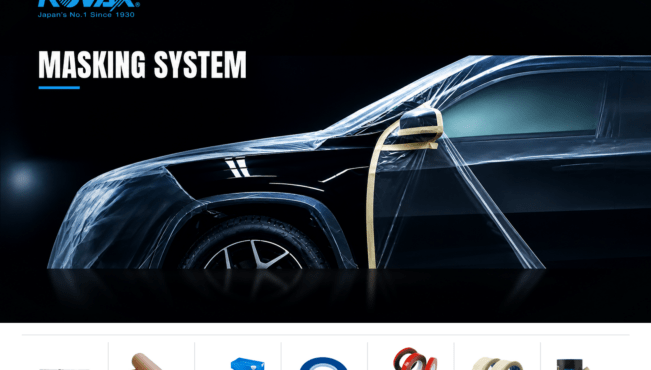

Masking is one of the least discussed stages of a repair—and one of the most repeated. Every job, ...
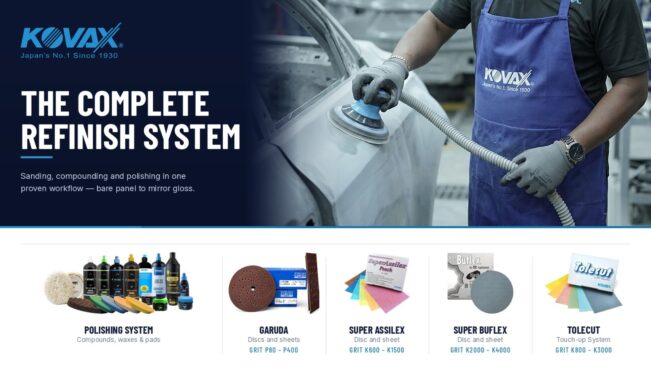
Bodyshop capacity has become a strategic concern for OEMs and dealer networks alike, not just a floo...


Experience the Kovax India difference – a partner you can rely on for quality, precision, and excellence in surface finishing.
