
You Don’t Always Need More T...
- Home
- news & articles
- You Don’t Always Need More Technicians. You Need More

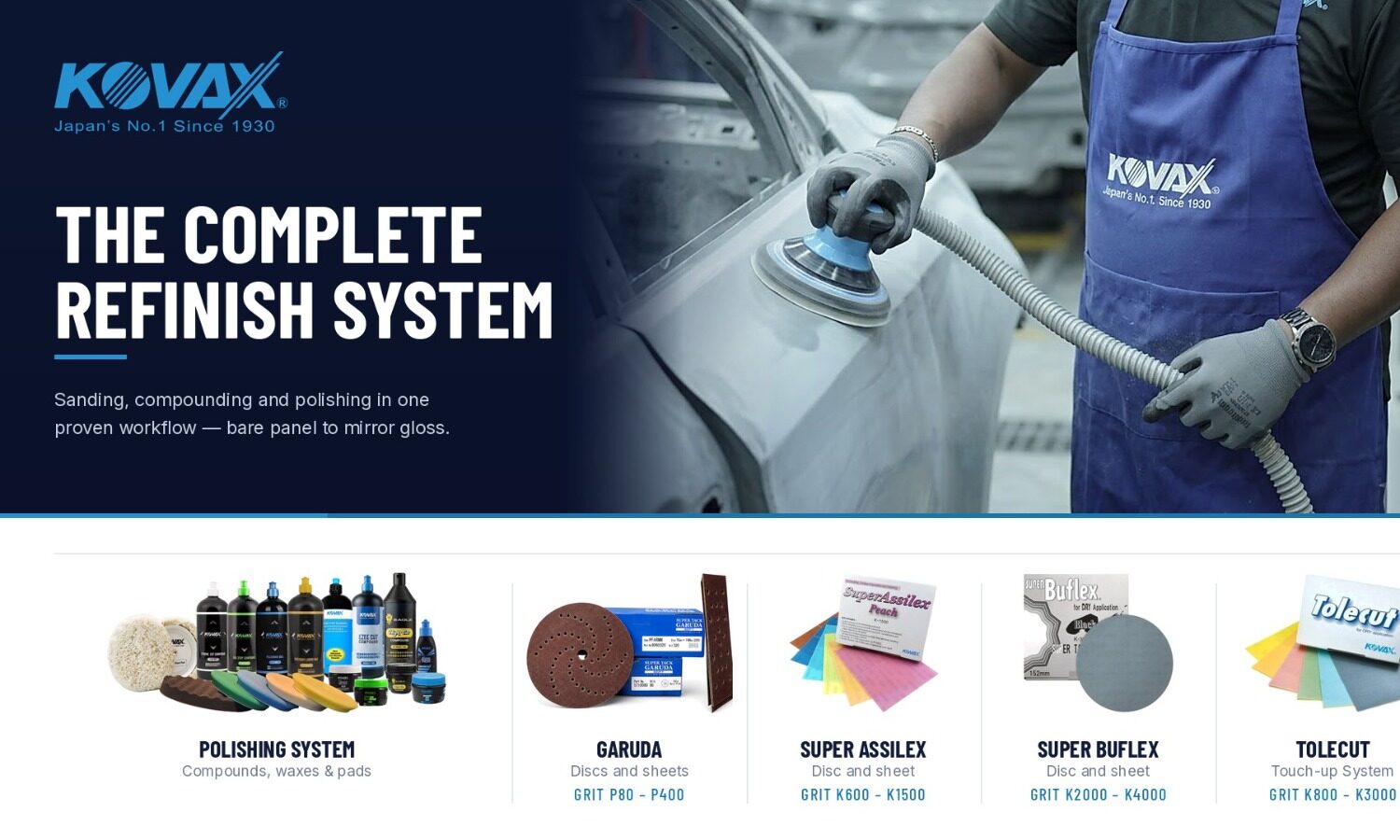
Bodyshop capacity has become a strategic concern for OEMs and dealer networks alike, not just a floor-level scheduling issue. Technician availability is tightening, repair complexity is rising, and customer expectations on turnaround time continue to climb — regardless of brand or market.
The question dealer networks now face isn’t just “how do we hire more technicians” — it’s “how do we get measurably more output from the technicians already on the floor, without compromising quality or consistency?”
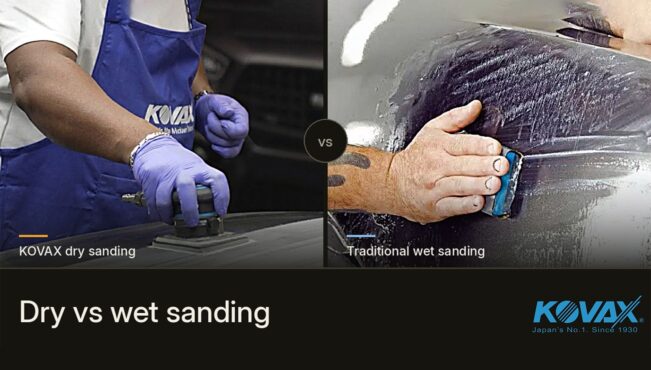
This is where a standardized, process-led approach to sanding and finishing — built around Kovax’s abrasive systems — presents a compelling and directly measurable case.
Why a Headcount-Led Approach Falls Short
Adding technicians to grow capacity carries costs that rarely show up as a single line item, but compound significantly at network scale:
These pressures don’t just slow growth — they cap how quickly a Bodyshop, or a dealer network, can respond to rising demand.
Where Technician Time Actually Goes
Sanding and finishing aren’t one task — it’s a sequence, and each stage quietly adds to total repair time. Seeing where that time concentrates is the first step to reducing it.
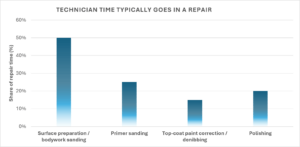
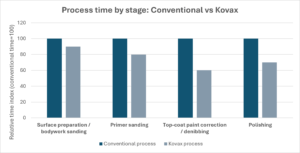
**Under standard conditions
Across these four stages, shifting to Kovax abrasive system practices delivers an overall technician time saving of approximately 20% — recovered from existing capacity rather than added headcount.
The Dealer-Level Financial Impact
For an individual dealer Bodyshop, a technician-hour recovery of this kind typically shows up in three ways:
Even a modest recovery in technician-hours, multiplied across a dealer’s monthly job volume, translates into meaningful additional throughput — without added headcount or floor space.
A simulated calculation of Turnaround of an average Bodyshop with Kovax Abrasive Sanding System.
For an individual dealer Bodyshop that repairs 200 cars per month, with an average repair cost of ₹15,000 per car.
| Metric | Value |
| No. of job cards per month | 200 |
| Technicians on floor | 7 Nos |
| Working hours per day | 7.5 Hours |
| Working days per month | 24 Days |
| Total technician-hours per month | 1260 Hours |
| Average repair revenue per job | ₹15,000 |
| Monthly body & paint revenue | ₹30,00,000 |
Expected additional revenue with a 20% technician-hour recovery:
| Basis | Monthly Additional Revenue | Annual Additional Revenue |
| 20% technician-hour recovery via Kovax Sanding process (~40 cars/month x ₹15,000) | +₹6,00,000 | +₹72,00,000 |
Capacity and Profitability
| Extra Job cards / month
+40 |
Value / Job card
₹15,000 |
Additional Revenue / month
₹6.0L |
Additional Revenue / year
₹72.0L |
40 additional cars a month, worth ₹6.0L in extra monthly profit — from the same 7-painter team, with no new hires.
Bodyshop profitability isn’t solved by adding more people to the floor — it’s solved by extracting more output from the people already there. A standardized, Kovax-led sanding and finishing process addresses the operational core of that equation directly, making it a strong candidate for network-wide standardization.
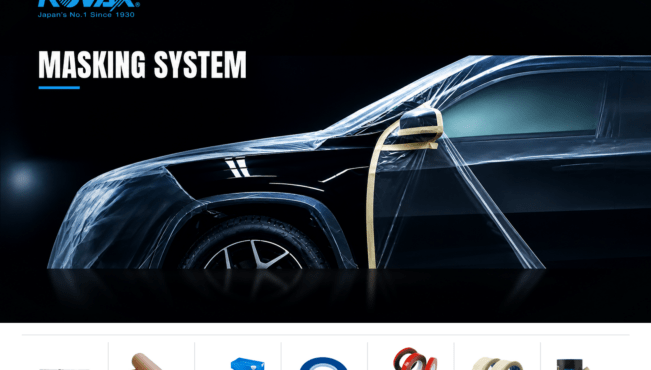

Masking is one of the least discussed stages of a repair—and one of the most repeated. Every job, ...
Bodyshop profitability has become a strategic concern for OEMs, not just a dealer-level metric. Risi...


Experience the Kovax India difference – a partner you can rely on for quality, precision, and excellence in surface finishing.
